
Teaching the Teachers: The Ophthalmology Foundation at Eyexcel Global 2026
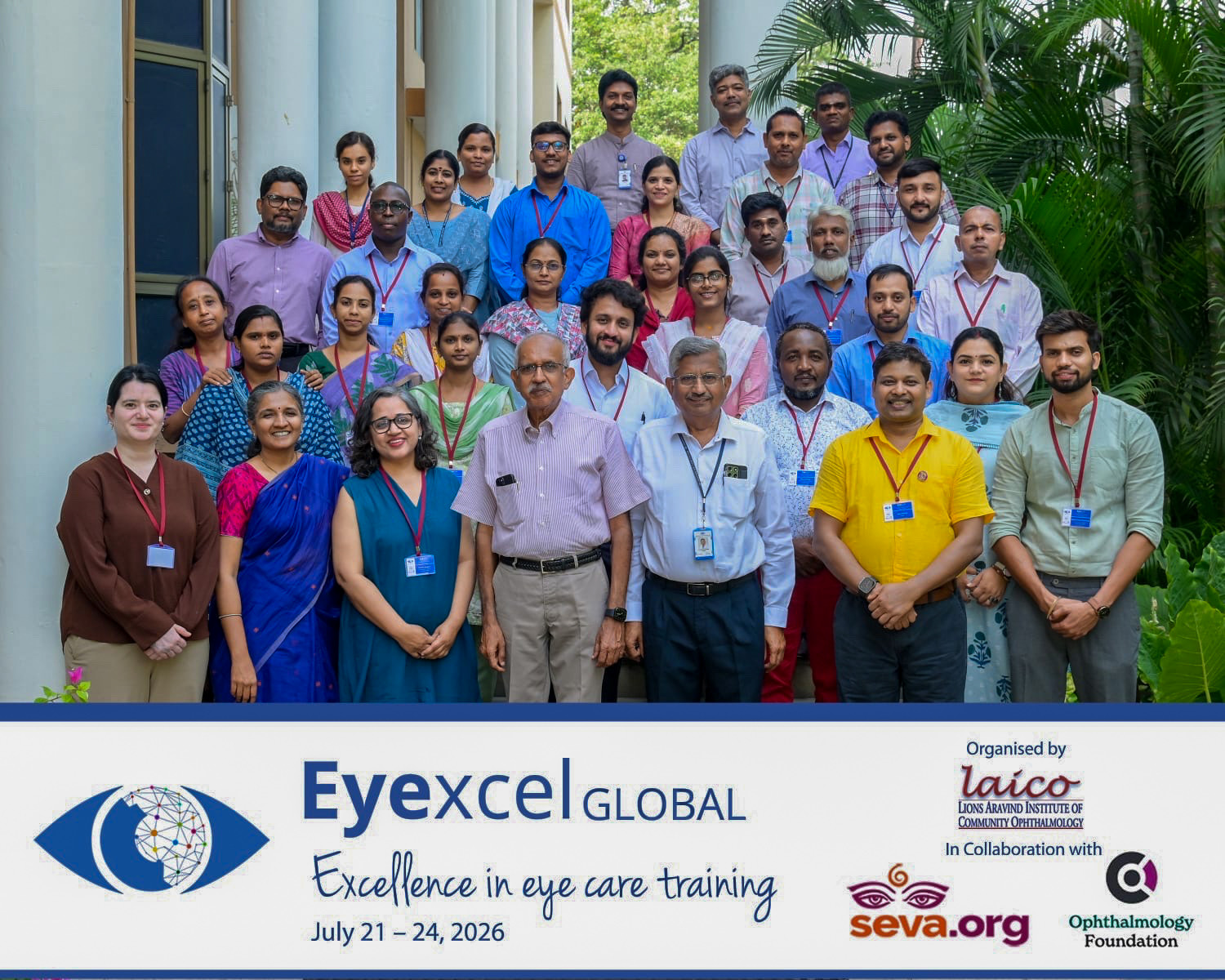
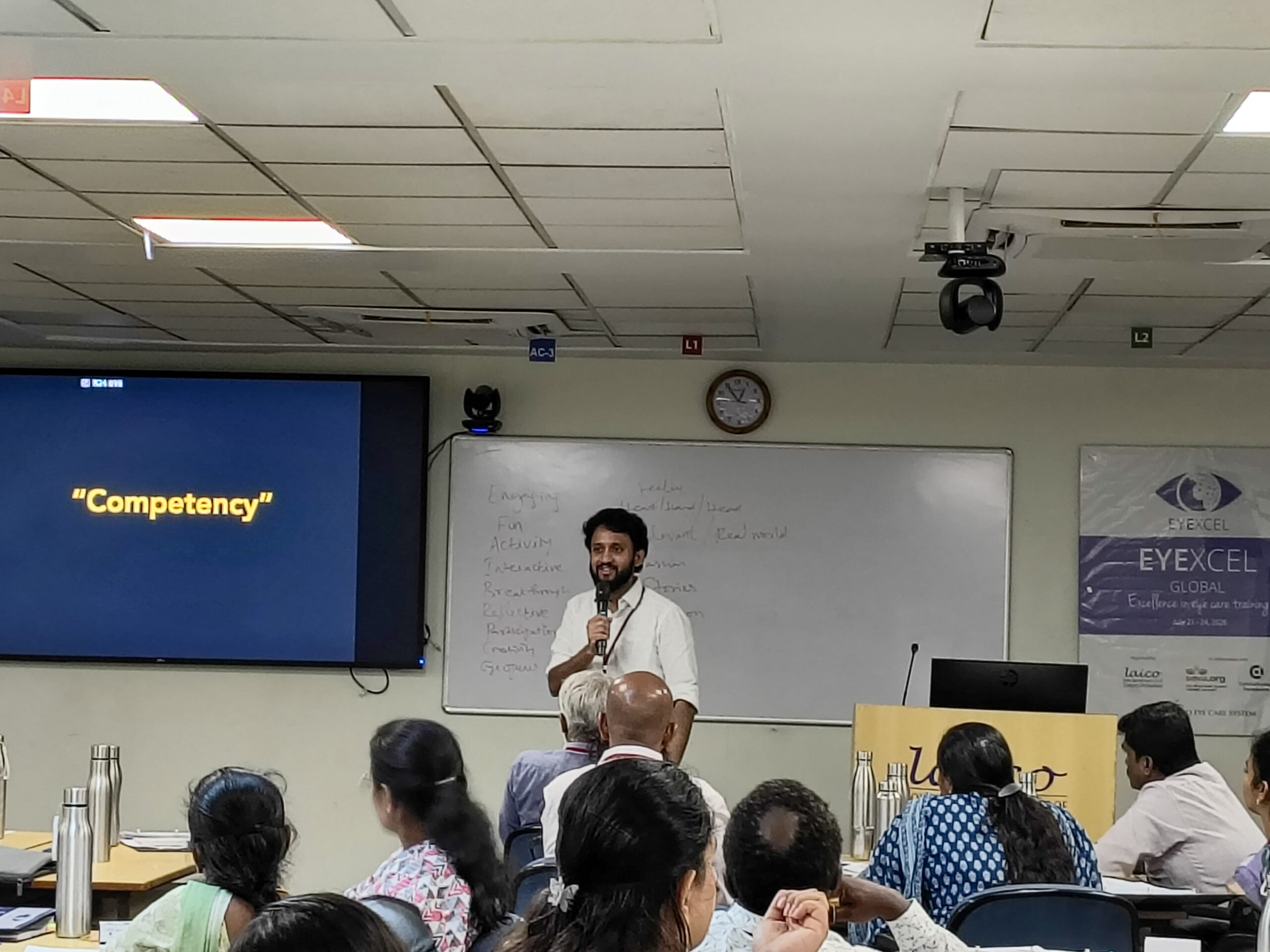
At the Lions Aravind Institute of Community Ophthalmology (LAICO) in Madurai, India, the Ophthalmology Foundation returned this July as a co-sponsor of Eyexcel Global 2026 — the four-day course that trains eye care institutions to build training programs of their own. Representing the Foundation as invited faculty was Dr Pranesh Balasubramaniam, Ophthalmology Foundation Education Committee member and Co-Chair of its Mentoring Division, who delivered seven sessions across the opening two days.
Carrying the instructional design curriculum
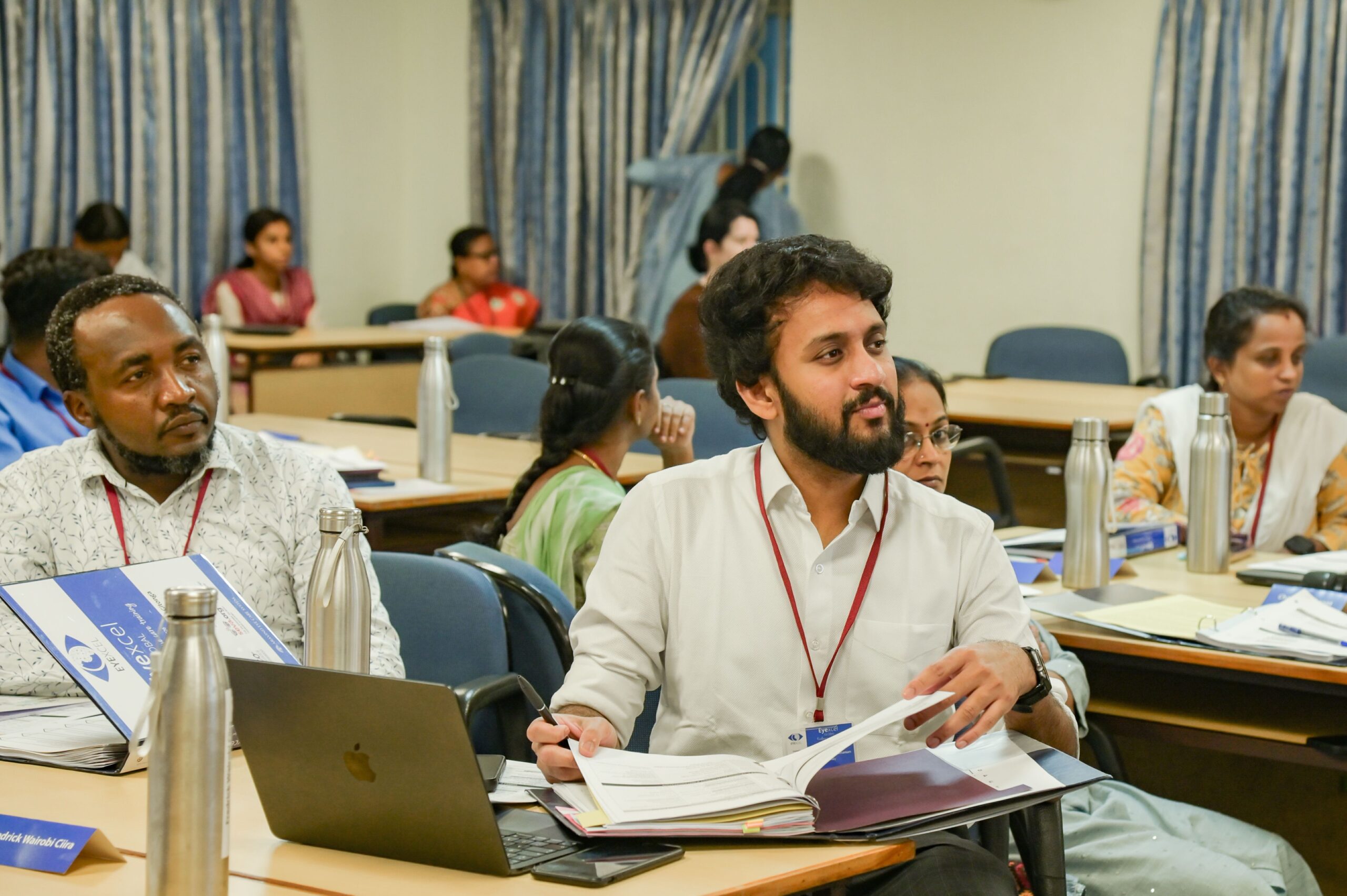
The Eyexcel team created a competency-based training program guided by Adult Learning Principles and the ADDIE model (Analysis, Design, Development, Implementation, and Evaluation), delivered as a practical method rather than theory. Each session opened directly into a team workbook exercise. Participants left every talk with something to write rather than something to remember: their own competency lists, learning objectives, and assessment plans, which they presented back to the room the following morning.
Some of the portions of the curriculum have long been led by Dr Karl Golnik, Chair of Faculty Development and Board Member of the Ophthalmology Foundation, whose work has shaped how a generation of ophthalmic educators approach teaching. Dr Balasubramaniam described his role as “big shoes to fill”, and the handover as an example of exactly the faculty-development pipeline the Foundation exists to build.
From Madurai to Kiambu
Eyexcel is built around team facilitation, and each faculty member works closely with one participating institution. Dr Balasubramaniam was paired with the team from Imperial College of Medical and Health Sciences in Kiambu, Kenya: Mr Fredrick Wairobi (RN, BScN), Senior Head of the School of Nursing, and Mr Moses Gitonga, College Principal, who arrived to design a brand-new optometry training program from the ground up.
Over four days, the Kenyan team worked through each stage: analyzing the training need in their own setting, defining the competencies their future optometrists must demonstrate, writing measurable objectives, and planning how those competencies would be assessed.
That trajectory – an instructional design method taught in a Madurai classroom and applied to workforce development in Kenya – is the Foundation’s global education mission in miniature.
A partnership that keeps producing educators
Ophthalmology Foundation would like to thank the Faculty: Mrs Dhivya Ravilla Ramasamy, Executive Director of LAICO, and the LAICO team for the seamless organization of the course, and Mr Arun Kumar Acharya of Seva Foundation for leading the sessions with passion and energy.
This annual program also carried a personal dimension. Dr Balasubramaniam trained at Aravind Eye Care System before building his career in the UK, where he now practices at the Princess Alexandra Eye Pavilion, Edinburgh. Coming back to the institution that once trained him, now representing the Ophthalmology Foundation, reflects something the Foundation works on continuously: creating the next generation of Ophthalmology educators.
The Ophthalmology Foundation supports eye care education worldwide through faculty development, mentoring and curriculum design.