We are pleased to share news coverage highlighting the work and impact of the Ophthalmology Foundation. These articles showcase our programs, partnerships, and ongoing efforts to advance our mission. Take a look at what we’ve been accomplishing.
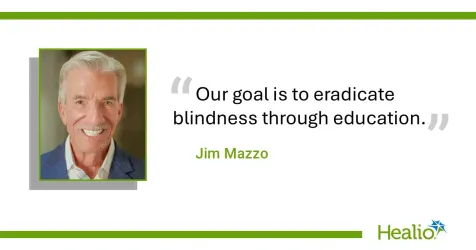
Q&A: Ophthalmology Foundation fights blindness worldwide with low-cost education, training
Healio.com, 30 September 2026
Jim Mazzo, president of the Ophthalmology Foundation, discusses the steps the Ophthalmology Foundation has taken to fight blindness and how ophthalmologists who would like to make a difference on a global scale can get involved. Preventing blindness worldwide requires teamwork between industry veterans and ophthalmologists
International ophthalmology partnership to strengthen training, recognition and care
The Royal College of Physicians and Surgeons of Glasgow, 29 September 2026
The Royal College of Physicians and Surgeons of Glasgow and the Ophthalmology Foundation have signed a new partnership agreement to support ophthalmologists throughout their careers – and advance patient care. The Memorandum of Understanding (MoU) will strengthen international collaboration in education, assessment and professional development. Under the agreement, the two organisations will formally recognise the value and professional standing of each other’s examinations.
SPO at the 70th Brazilian Congress of Ophthalmology
Sociedade Portuguesa de Oftalmologia, September 2026
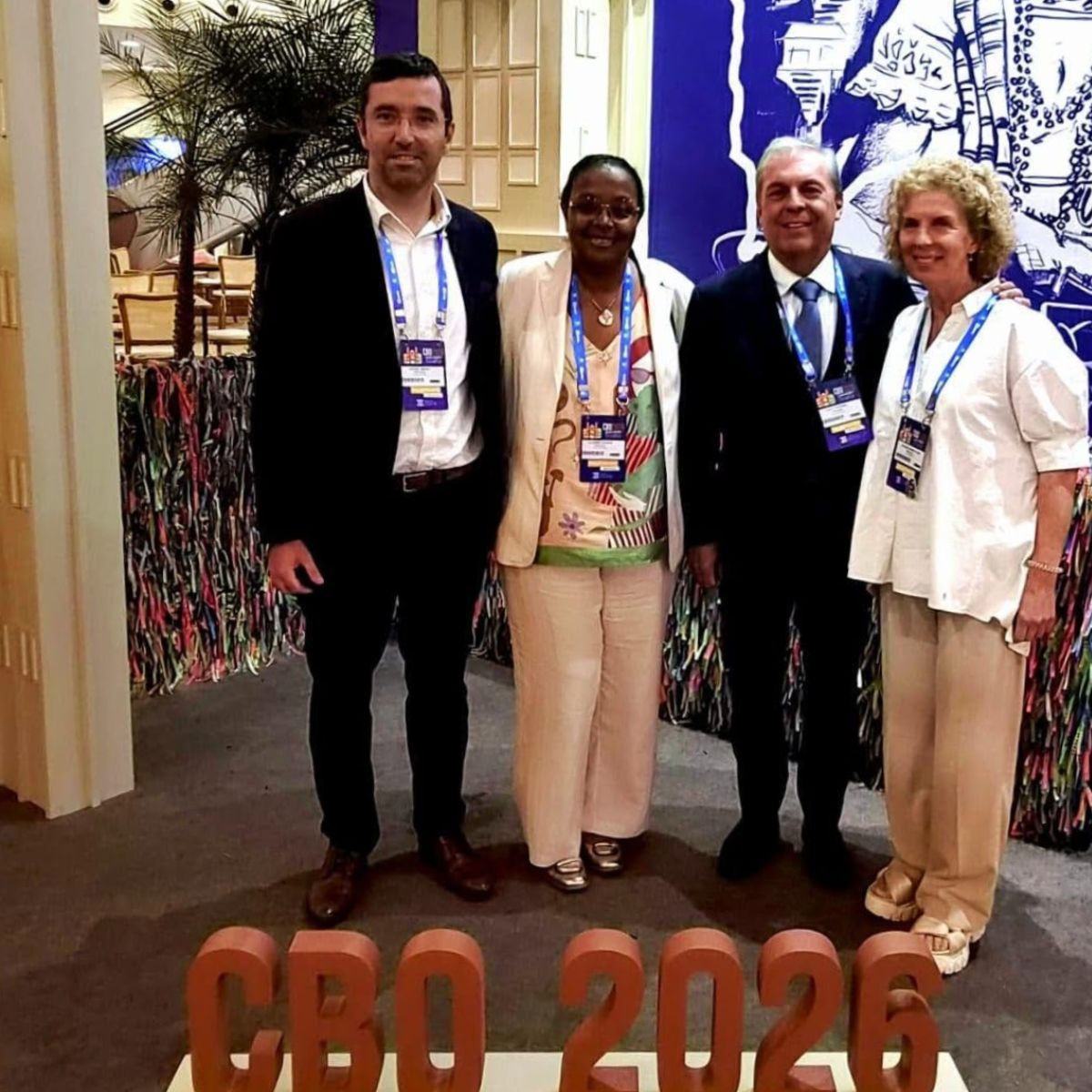
The Ophthalmology Foundation was represented at the 70th Annual Brazilian Ophthalmology Congress. The Ophthalmology Foundation was proud to endorse CBO LDP: “Empower One. Transform Many. From Learner to Change-Maker,” exploring how education can cultivate transformative leadership in ophthalmology. In addition, the Ophthalmology Foundation was part of the CBO Conference of Educators featuring: “Beyond the Curriculum: How Europe Is Transforming Ophthalmology Training.
Microlearning in ophthalmic surgery training: an integrative narrative review
Annals of Eye Science, 30 September 2026
Global eye health priorities require innovative educational strategies that can expand workforce capacity despite limited financial and human resources. This narrative review examined how integrating Competency-based medical education (CBME) and entrustable professional activities (EPAs) can enhance competency-based ophthalmic education and support scalable training globally.
Advancing ophthalmic training: the role of subspecialty fellowships
Community Eye Health Journal, 24 July 2026
This article highlights how international ophthalmology fellowships can strengthen both individual ophthalmologists and their home institutions. Fellows gain advanced clinical and surgical skills while also being exposed to different health systems, disease patterns, teaching approaches, and research opportunities.
Beyond the clinic: Tackling the global ophthalmology training gap
Ophthalmology Times Europe, 21 July 2026
The Ophthalmology Times Europe (OTE) spoke with David E. I. Pyott, MDhc, Vice President and Founding Board Member of the Ophthalmology Foundation about the foundation’s programs, the role European institutions play in hosting fellows, the launch of a new international examination and the digital tools reshaping how surgical skills are taught across borders.
The art of feedback: crafting mentorship in medicine
Annals of Eye Science, 30 March 2026
Mentorship and effective feedback are crucial parts of medicine that frequently get pushed aside for the more objective assessments in medical education. It is imperative for feedback and mentorship to be addressed now more than ever because of the high prevalence of physician burn-out and overwhelming stress levels in the medical field, especially after the coronavirus disease 2019 pandemic. The intent of this manuscript is to review best practices in providing effective feedback.
Mastering the question: tips and examples for effective ophthalmology exams
Community Eye Health Journal, 2 February 2026
The article offers practical best practices for creating and reviewing rigorous ophthalmology exam questions that accurately assess candidates’ knowledge and clinical reasoning. It also provides sample questions from the Ophthalmology Foundation exams in the areas of visual science, optics, and clinical ophthalmology.
From setback to comeback: navigating exam failure in medical training
Community Eye Health Journal, 5 December 2025
This article offers practical guidance for ophthalmologists who do not pass an examination. The article emphasizes that exam failure should be viewed as feedback and an opportunity for learning, rather than a reflection of a candidate’s ability or potential. Learn how to respond to exam failure with reflection, support, perseverance, and a constructive plan for improvement.
Strive to thrive—an international partnership for developing an outcome-based curriculum for cataract surgery training by simulation
Annals of Eye Science, 30 September 2025
Health professions education (HPE) in underserved and resource-constrained regions faces persistent challenges, including limited faculty development opportunities and the absence of context-specific curricula. This study explores integrating online active and constructivist social learning strategies within team projects to address these educational gaps, emphasizing equitable international partnerships between experienced global ophthalmological societies (GOS) in HPE, and national ophthalmological societies especially in underserved regions.
Mastering online ophthalmology exams: essential tips for success
Community Eye Health Journal, 6 August 2025
This article provides practical advice for ophthalmologists preparing for online examinations. It covers creating a structured study plan, reviewing both basic sciences and clinical ophthalmology, practicing with exam-style questions, and becoming familiar with the online exam platform and technology. This includes combining focused studying, practice questions, technology preparation, and good exam-day habits.
Podcast: Updates on education and offerings from the Ophthalmology Foundation
Ophthalmology360, 21 April 2025
In a new episode of The Ophthalmic Project, Mark Dlugoss speaks with Jim Mazzo, president of the Ophthalmology Foundation and executive chairman at Neurotech Pharmaceuticals, about what the Ophthalmology Foundation is focused on in education.
Making the case for the evolving role of social media in health professions education and a literature review on the application of some in ophthalmology
Annals of Eye Science, 30 June 2024
Social media (SoMe) has emerged as a tool in health professions education (HPE), particularly amidst the challenges posed by the coronavirus disease 2019 (COVID-19) pandemic. Four key components were outlined as necessary for a successful integration, and include designing learning experiences, defining educator roles, selecting appropriate platforms, and establishing educational objectives. This article stemmed from the online Teaching Skills Series module on SoMe in education from the Ophthalmology Foundation, and drew upon evidence supporting learning theories relevant to SoMe integration and models of education.
Orbis Global Residency Foundation Curriculum
Annals of Eye Science, 14 May 2024
Recognizing the need for addressing regional training priorities, Orbis International has created a “Foundation Curriculum,” with the Ophthalmology Foundation, which contains the essentials that all ophthalmologists should know and be able to do. The Orbis global residency foundation curriculum is designed to encompass all aspects of ophthalmology relevant to any training program worldwide. It includes the essential knowledge and skills that residents must acquire.
Improving the training abilities of ophthalmic educators: the Ophthalmology Foundation’s initiatives
Annals of Eye Science, 30 March 2024
Our goal as medical educators is for our students to learn what they need to know and competently perform ophthalmic procedures. Most medical educators are not taught how to teach but rather learn by role-modeling their mentors. The Ophthalmology Foundation (OF) was formed in part to improve the training ability of ophthalmic educators. This is done through a variety of face-to-face and online activities.
Good practices in simulation-based education in Ophthalmology – A thematic series. An initiative of the Simulation Subcommittee of the Ophthalmology Foundation Part I: Initiating and maintaining simulation-based training
The Pan-American Journal of Ophthalmology, 13 November 2023
Understanding how learning occurs is useful to inform instructional design and create more engaging and enjoyable learning environments. In this first article of a quartet thematic series on good practices in simulation-based training, we reviewed several learning theories that can illuminate learning by simulation. We describe how to develop and improve a simulation center considering a holistic approach. Finally, we conclude by supporting the concept of developing mastery in high-quality education by simulation as a natural ally for accreditation acknowledgment and demonstrable impact on educational and clinical outcomes with patient safety and better care.
Good practices in simulation-based education in ophthalmology – A thematic series. An initiative of the Simulation Subcommittee of the Ophthalmology Foundation Part II: Faculty development for simulation-based education in ophthalmology
The Pan-American Journal of Ophthalmology, 20 October 2023
Faculty development should be a priority to sustain and support simulation-based training programs. Clinical educators in ophthalmology should be provided with development opportunities and training in simulation-based education opportunities to become better facilitators and keep up with this fast-growing educational field. Faculty development programs must be designed to train facilitators who are competent in simulation-based education which aligns with social needs and the institution’s mission and philosophy.
Good practices in simulation-based education in ophthalmology. A thematic series. An initiative of the Simulation Subcommittee of the Ophthalmology Foundation Part III: Curriculum development for simulation based education in ophthalmology training programs
The Pan-American Journal of Ophthalmology, 20 October 2023
Simulation-based training emerged in recent decades and follows a stepwise approach starting with basic skills training, moving on to procedural training culminating in team training in an authentic environment. Simulation-based education programs must be embedded into a curriculum and should not be an optional add-on. Further evidence proves that deliberate practice, procedural simulation, and debriefing can be transferred to operational performance in clinical settings and could result in safer and more efficient care for patients, health-care providers, and health systems.
Good practices in simulation-based education in ophthalmology – A thematic series. An initiative of the Simulation Subcommittee of the Ophthalmology Foundation Part IV: Recommendations for incorporating simulation-based education in ophthalmology training programs
The Pan-American Journal of Ophthalmology, 20 October 2023
Recommendations could be useful to guide institutions planning to incorporate simulation-based education (SBE) into their training programs or institutions that have an established program but want to benchmark it against best practices. Recommendations for creating collaborations and partnerships for surgical simulation training will enhance the impact of any eye care program.