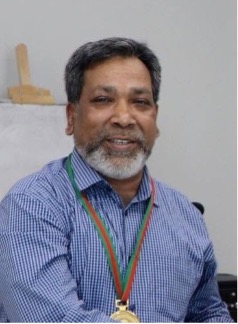

Read more below from Dr. Syeed Mehbub Ul Kadir on the achievements of the Ophthalmological Society of Bangladesh and partnership with the Ophthalmology Foundation from August 2026:
Mission, Membership, and Role in Ophthalmology
For readers who may be unfamiliar with your organization, could you tell us about its mission, the countries or regions it serves, and its role in supporting ophthalmology education, training, and professional development?
The Ophthalmological Society of Bangladesh (OSB) strives to enhance the standard of ophthalmic practice in Bangladesh by supporting eye-care professionals through quality education, scientific programs, conferences, and access to the latest research. Our mission is to ensure advanced, ethical, and patient-centered eye care for all.
Membership and Reach
Approximately how many members, trainees, or affiliated ophthalmologists are currently involved with your organization, and how has this grown in recent years?
There are about 1,650 life members and 450 general members. Trainees are not allowed to become full members. Its is closely and coordinately working with Cataract, Glaucoma, Pediatric, Retina Society of Bangladesh.
Key Achievements
Looking back over the past five to six years, what achievements are you most proud of as an organization?
Over the past five to six years, OSB has been proud to strengthen opportunities for continuing professional development through regular CME programmes, national and international conferences, workshops, and academic activities. The Society has also expanded access to digital services and online learning opportunities for its members, while supporting scientific research and initiatives aimed at reducing avoidable blindness in Bangladesh.
Reputation and Impact
Your organization is widely recognized within the ophthalmology community. What factors have contributed to its reputation, growth, and success?
- Organize national and international ophthalmology conferences, workshops, and academic programs.
- Publish peer-reviewed journals and support scientific research and manuscript submission systems.
- Maintain structured membership management for doctors and eye-care professionals.
- Provide digital services including online registration, payments, certificates, and verification.
- Promote continuing medical education (CME) and professional development opportunities.
- Support national initiatives to reduce avoidable blindness in Bangladesh.
Innovation and Digital Transformation
Many professional organizations have embraced digital transformation, including online education, virtual events, digital assessments, and simulation-based training. What impact has this had on your members and educational programs?
We hold 6 to 7 CME and those are available online for members. Annual Conference is held where international faculties also join as invited speakers.
Maintaining Educational Standards
Maintaining high educational and professional standards across different institutions and regions can be challenging. How does your organization ensure consistency and quality in training, education, and professional development?
Unfortunately OSB is not associated with Curriculum, this is done be different body and is not under OSB’s jurisdiction.
Continuing Professional Development
Beyond formal ophthalmology training, continuing professional development is essential for keeping ophthalmologists up to date with advances in the field. How does OSB support ongoing learning and professional development among ophthalmologists in Bangladesh?
Unfortunately OSB is not associated with Curriculum, this is done be different body and is not under OSB’s jurisdiction.
Partnership with the Ophthalmology Foundation
Could you describe your organization’s relationship with the Ophthalmology Foundation and what you see as the key benefits of this collaboration for trainees, educators, institutions, and patients?
OSB supports continuing professional development through regular CME programmes, scientific conferences, workshops, academic meetings and other educational activities. These initiatives provide ophthalmologists with opportunities to stay updated on advances in ophthalmic practice, exchange knowledge and experiences with colleagues, and strengthen their skills throughout their professional careers.
Future collaboration
Looking ahead, how do you envision your organization and the Ophthalmology Foundation working together to further strengthen ophthalmology education, training standards, research, and professional development?
In future we see opportunities to host trainees to our different Institutions through OF fellowship program. Also we would like our ophthalmologist to avail these fellowships to other reputed institutions. Also to have OF examinations and syllabus incorporated to our countries syllabus. And may be get exemptions for candidates who pass OF examination for our examinations.
Vision for the next 5–10 years
Finally, what is your vision for the future of ophthalmology education, training, and patient care in your region over the next five to ten years?
To get our examinations affiliated and accredited by different international bodies and institutions.
The Role of OF Examinations
How have the OF examinations supported trainees and ophthalmologists in your region, and what impact do you believe internationally recognized examinations have on educational standards and professional development?
The OF examinations provide young ophthalmologists in Bangladesh with the opportunity to undertake an internationally recognized examination and benchmark their knowledge against international standards. We believe this can support professional development, encourage structured learning and help raise educational standards for ophthalmologists in the region. Our partnership with OF also provides opportunities for candidates to pursue further international educational and fellowship opportunities.
Challenges Facing Ophthalmology Trainees
What do you see as the biggest challenges currently facing ophthalmology trainees in your region, and how is your organization helping to address these challenges?
Hands on training is the main limitation in our region. OSB is offering wet lab, dry lab, skill transfer coursed to overcome this.
The Value of Internationally Recognized Examinations
What role do internationally recognized ophthalmology examinations play in supporting training standards, career progression, professional development, and the delivery of high-quality patient care within your region?
Internationally recognized examinations provide an important benchmark for ophthalmologists and help promote consistent standards of knowledge and professional development. They encourage trainees to engage in structured learning, support career progression and provide an internationally recognized measure of achievement. Ultimately, strengthening educational and professional standards can contribute to the delivery of safer, higher-quality eye care for patients.
How Can Readers Get Involved?
If readers would like to learn more about your organization, educational activities, examination support or opportunities for collaboration, where should they go for further information? Please include your preferred website, email address and social media channels.
Visit the OSB website.